


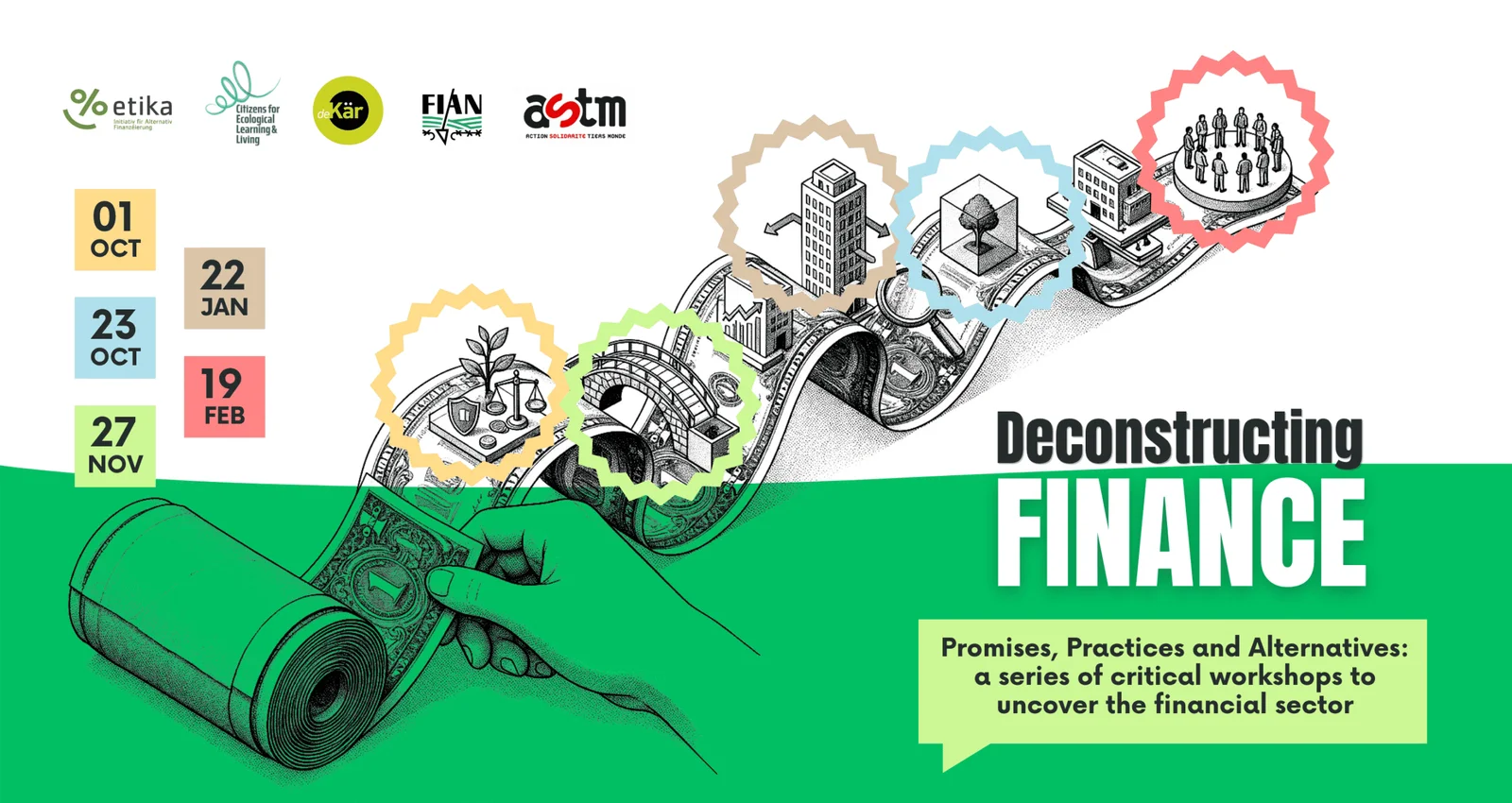
Development cooperation has changed fundamentally over the past decade. Whereas it once relied primarily on non-repayable grants, a growing share of public funding now flows into development funds, blended finance structures, and other financial vehicles. The aim is for this money not only to promote economic development in recipient countries but also to generate financial returns for investors. On the one hand, public resources are expected to be used more efficiently because, unlike traditional grants, the funding flows back at least partially – or may even generate income. On the other hand, projects expected to generate financial returns are intended to attract private capital and expand development financing well beyond the initial public investment.
The workshop examines the consequences of this financialization of development cooperation. How do these new financial structures work? What role do investment funds, development banks, and financial centres play? How much of the funding provided actually reaches people and projects on the ground, and how much remains within the financial sector in the form of management fees, service costs, and investor returns?
Particular attention is paid to Luxembourg. As the world’s second-largest fund domicile and an internationally significant hub for microfinance, the Grand Duchy plays a key role in the global architecture of development finance. A substantial share of European development banks’ investments in such funds – including those of Germany’s KfW Development Bank – is channelled through Luxembourg-based structures. What does this mean for recipient countries, for development cooperation, and for Luxembourg’s financial centre?
Using concrete case studies – such as the Luxembourg-domiciled Arbaro Fund – the workshop analyses typical financial constructions and discusses their implications for development policy. It also examines the assumptions behind the growing involvement of private financial actors and asks whether the promise that return-driven financing makes development cooperation more effective stands up to scrutiny.
The workshop is aimed at development cooperation professionals, civil society actors, journalists, and anyone interested in better understanding the relationship between financial centres and development policy.
https://etika.lu/nos-evenements/deconstructing-finance/